
For Most of human history, the physical world and the digital world existed separately. We looked at screens to access information, then returned our attention to the environment around us. Today, that boundary is beginning to blur.
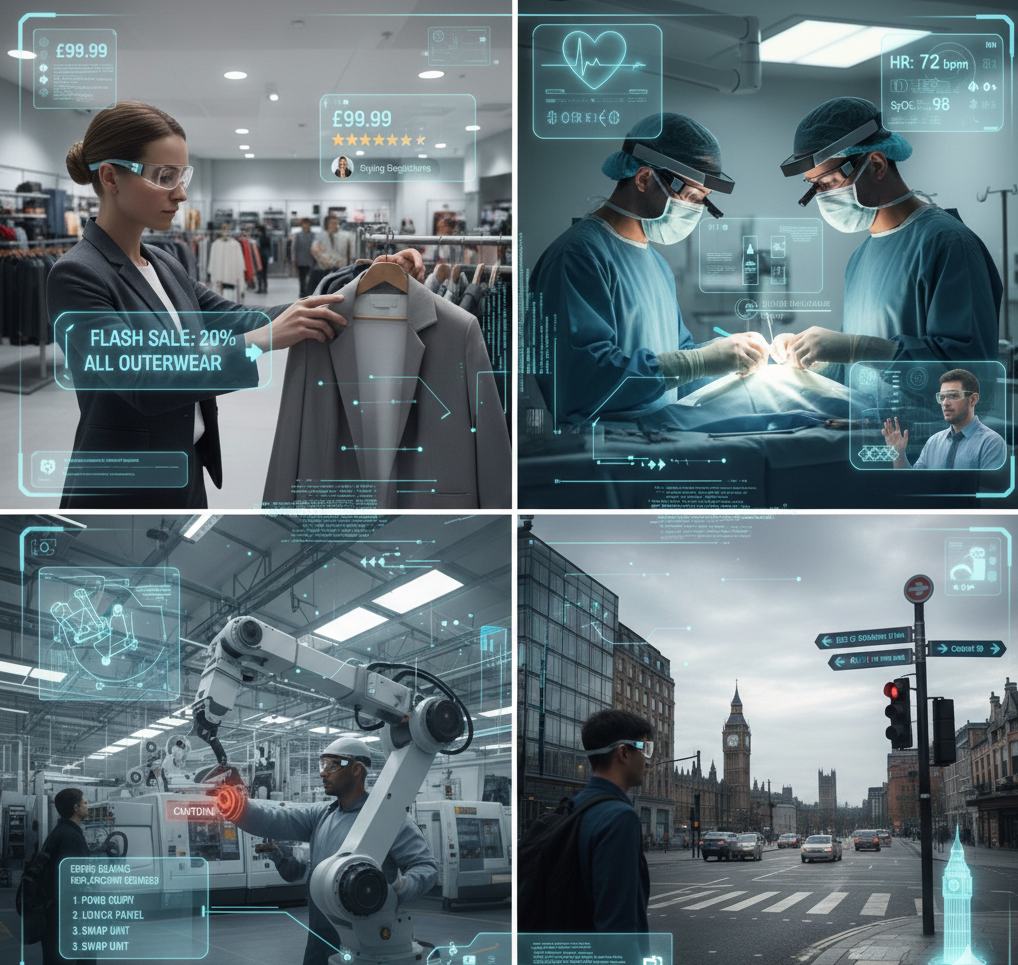
A new paradigm is emerging where digital content is no longer confined to devices – it is layered directly onto physical spaces. Directions appear in front of us, product information floats beside store shelves, maintenance instructions overlay machinery, and remote collaboration tools share our environment in real time.
This shift is known as reality layering – the stacking of digital information, visuals, and interactions onto the real world. Rather than replacing physical spaces, these digital layers enhance them, creating environments that are more informative, interactive, and responsive.
At TeMetaTech, we see reality layering as a foundational step toward everyday spatial computing.
What is Reality Layering?
Reality layering refers to the integration of digital elements into physical environments in a way that feels natural and persistent. Unlike traditional screens that pull attention away from surroundings, layered systems place information within context.
These overlays may include:
- Navigation cues in real space
- Data visualization tied to objects
- Interactive instructions
- Virtual objects anchored to locations
- Contextual notifications
The goal is not distraction, but augmentation – making physical spaces smarter and easier to navigate.
Technologies Behind Reality Layering
Several advancing technologies make layered environments possible:
Augmented Reality (AR)
AR platforms project digital elements into a user’s field of view through smart glasses, mobile devices, or headsets.
Spatial Mapping
Sensors and cameras understand physical geometry, allowing digital content to align accurately with real-world surfaces.
AI Context Awareness
Artificial intelligence interprets surroundings and user intent, ensuring overlays appear when relevant.
Edge and Cloud Computing
Processing distributed across devices enables real-time rendering and low-latency interaction.
Together, these systems create digital layers that respond to movement, location, and purpose.
How Reality Layering Will Shape Everyday Environments
Retail Spaces
Stores evolve into interactive environments where shoppers see product details, reviews, or styling suggestions layered directly onto items. Promotions become spatial experiences rather than static signage.
Healthcare Settings
Medical professionals can view patient data or procedural guidance within their field of vision, reducing the need to shift focus between screens and patients.
Manufacturing Floors
Technicians receive live maintenance instructions and safety alerts anchored to equipment, improving efficiency and reducing errors.
Urban Navigation
Cities become navigable through spatial cues – arrows, landmarks, and transit information appearing naturally in the environment.
Workplaces
Remote collaboration overlays allow distributed teams to share the same visual workspace, bridging physical distance.
In each case, digital information becomes part of the environment itself.
Benefits of Layered Reality
Reality layering offers several practical advantages:
- Faster understanding through contextual information
- Reduced cognitive load by placing data where it’s needed
- Improved safety and precision in operational tasks
- Enhanced customer engagement
- More intuitive navigation and learning
Instead of switching attention between world and device, users interact with both simultaneously.
Challenges to Address
As with any emerging technology, reality layering introduces considerations:
- Privacy and data visibility in shared spaces
- Visual clutter or information overload
- Hardware accessibility and ergonomics
- Security of spatial data
- Social acceptance of persistent overlays
Thoughtful design is essential to ensure layered environments remain helpful, not intrusive.
The Future of Layered Environments
As spatial interfaces mature, digital layers will become more subtle and integrated. Information will appear only when useful, adapting to context and intent.
Designers will shift from creating standalone apps to designing spatial experiences, where digital elements coexist naturally with architecture and objects.
Physical environments will increasingly behave like intelligent platforms – responsive, informative, and adaptive.
Conclusion
Reality layering represents a major evolution in how humans interact with digital information. By embedding contextual overlays into everyday spaces, technology becomes less about screens and more about situational intelligence.
For industries ranging from retail to healthcare and manufacturing, layered environments promise greater clarity, efficiency, and engagement.
At TeMetaTech, we view reality layering as a bridge between the physical and digital – shaping environments that support people rather than distract them.
The future is not about escaping reality. It’s about enhancing it with intelligent layers.