
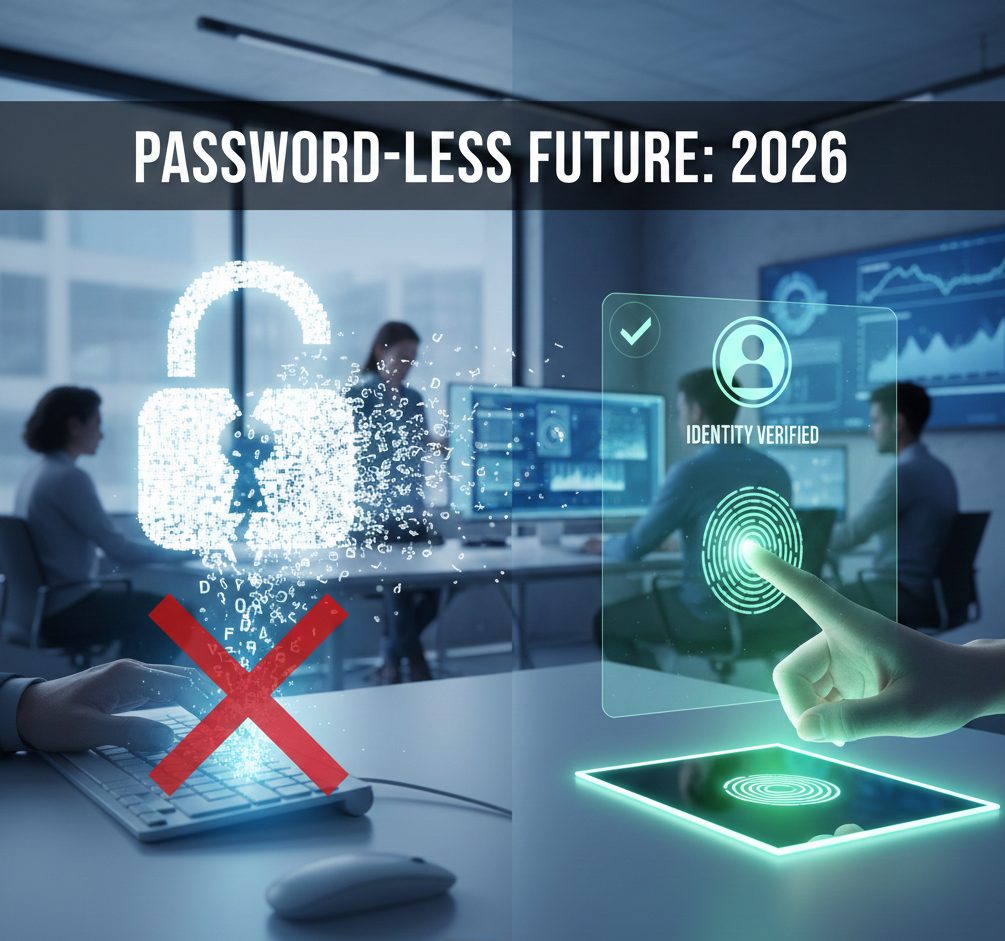
Passwords have been the foundation of digital security for decades. Yet they remain one of the weakest links in enterprise systems – easily forgotten, reused, phished, or stolen. As cyber threats grow more sophisticated and remote work becomes the norm, enterprises are finally moving toward a new security model.
Welcome to the password-less future.
By 2026, many organisations are eliminating passwords entirely, replacing them with stronger, user-friendly authentication methods that improve both security and experience.
Why Passwords Are Failing Enterprises
Passwords were never designed for the scale and complexity of today’s digital environments. Enterprises now manage thousands of users, applications, devices, and access points.
Common problems with passwords include:
· Weak or reused credentials
· Phishing and credential-stuffing attacks
· High support costs due to password resets
· Poor user experience and productivity loss
Despite strict policies, humans remain the weakest part of password security.
What Does “Password-Less” Really Mean?
A password-less system removes the need for users to remember or type passwords. Instead, identity is verified using more secure and reliable signals.
Common password-less methods include:
· Biometrics (fingerprint, face recognition)
· Hardware security keys (FIDO2, YubiKey)
· Device-based authentication
· One-time passcodes (OTP)
· Magic links and push approvals
These methods reduce attack surfaces while making authentication faster and simpler.
How Enterprises Are Adopting Password-Less Security
1. Identity-first security models
Enterprises are shifting from perimeter-based security to identity-centric architectures. Access is granted based on verified identity, device health, and context – not just credentials.
2. Zero trust frameworks
Password-less authentication fits naturally into Zero Trust models, where every access request is verified continuously, regardless of location.
3. Strong device trust
Modern systems validate both the user and the device. If a device is compromised, access is denied automatically.
4. Cloud-native IAM platforms
Cloud identity providers now support password-less login natively, making adoption easier and scalable.
Security Benefits of Going Password-Less
· Eliminates phishing attacks tied to stolen passwords
· Reduces credential reuse risks
· Minimizes account takeovers
· Improves compliance with modern security standards
· Lowers IT support costs related to password resets
Enterprises see fewer breaches and faster response times.
User Experience Improvements
Password-less systems are not just safer – they’re easier to use:
· Faster login times
· No forgotten passwords
· Fewer lockouts
· Seamless access across devices
For employees and customers alike, this leads to higher satisfaction and productivity.
Challenges Enterprises Must Address
Transitioning to password-less authentication isn’t instant. Key challenges include:
· Legacy systems that still depend on passwords
· User education and adoption
· Device compatibility and access recovery
· Regulatory and compliance requirements
Most enterprises adopt a hybrid approach before fully eliminating passwords.
What The Password-Less Future Looks Like
By 2026:
· Passwords will become a fallback, not the default
· Biometric and hardware-based authentication will dominate
· AI will monitor login behaviour for anomalies
· Identity will replace credentials as the core security layer
Security will become stronger – and simpler.
Conclusion
The password-less future is no longer theoretical – it’s already underway. Enterprises are recognising that passwords create more risk than protection.
By replacing passwords with modern authentication methods, organisations can strengthen security, reduce operational costs, and improve user experience.
In 2026, the most secure enterprises won’t ask users to remember passwords – they’ll simply verify who they are.