
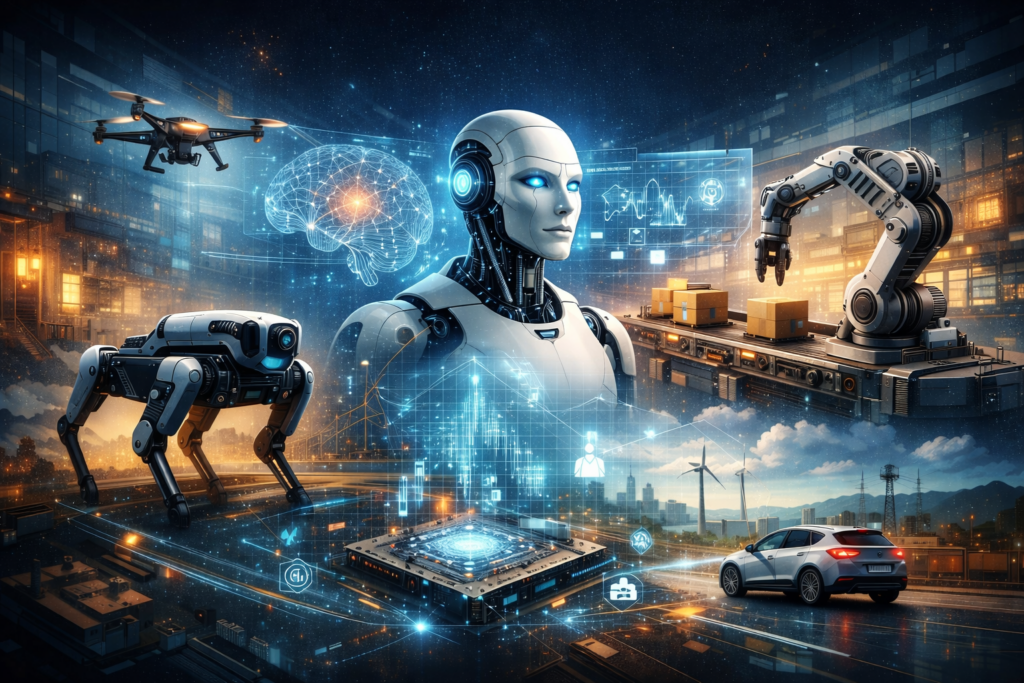
For many years, robotics has been closely tied to centralised computing. Robots performed tasks based on predefined instructions or commands processed in distant data centres. While this model enabled automation, it also introduced delays, dependency on connectivity, and limitations in responsiveness.
Today, that approach is evolving.
A new generation of systems is emerging where robots are not just connected, but intelligent at the source. This shift, known as Edge Robotics, brings computing power, data processing, and decision-making directly to the machines themselves. Instead of relying on constant communication with the cloud, these systems can interpret their environment and act instantly.
At TeMetaTech, we see this as a significant step forward in how automation is designed and deployed – moving from controlled systems to adaptive, real-time intelligence.
Rethinking How Robots Operate
Traditional robotic systems were built to follow instructions. They excelled in structured environments where tasks were predictable, and conditions rarely changed. However, as industries become more dynamic, this rigidity becomes a limitation.
Edge robotics introduces a different model. Here, robots are equipped with the ability to analyse data locally, understand context, and make decisions without waiting for external input. This allows them to operate more effectively in environments where conditions change rapidly.
Instead of asking what a robot has been programmed to do, the focus shifts to what the robot is capable of understanding and responding to in real time.
Why Edge Intelligence Matters
One of the key advantages of edge robotics is speed. In many real-world scenarios, even small delays can have significant consequences. Whether it is detecting a fault in a production line or navigating a busy warehouse, decisions must be made instantly.
Local processing eliminates the need to send data back and forth to the cloud, reducing latency and improving responsiveness. At the same time, it reduces dependence on network connectivity, allowing systems to function reliably even in remote or unstable environments.
Another important factor is the volume of data. Modern robots generate large amounts of information through sensors, cameras, and monitoring systems. Processing all of this data centrally is not always practical. By analysing data at the edge, only relevant insights need to be shared, making the system more efficient overall.
A Shift Toward Autonomous Systems
Edge robotics is not just about faster processing – it represents a shift toward greater autonomy. Machines are no longer limited to executing commands; they are beginning to interpret situations and determine appropriate actions.
In manufacturing, this means identifying defects and adjusting processes without human intervention. In logistics, it allows robots to navigate complex environments and optimise movement in real time. In healthcare and agriculture, it enables precise, context-aware actions that improve outcomes and efficiency.
Across these use cases, the common theme is the same: systems that can operate independently while still being part of a larger connected ecosystem.
Balancing Edge and Cloud
It is important to note that edge robotics does not replace the cloud – it complements it. The cloud remains essential for tasks such as training AI models, storing historical data, and coordinating large-scale operations.
However, the role of the cloud is shifting from direct control to strategic support. Immediate decisions happen at the edge, while the cloud provides long-term intelligence and optimisation.
This balance allows organisations to combine the strengths of both approaches – real-time responsiveness with large-scale insight.
Designing for a Distributed Future
Adopting edge robotics requires a different way of thinking about systems. Infrastructure becomes more distributed, and intelligence is no longer concentrated in one place. This introduces new challenges in areas such as security, system management, and observability.
At the same time, it creates opportunities to build systems that are more resilient, scalable, and adaptable. Instead of relying on a central point of control, organisations can design networks of intelligent machines that operate collaboratively.
Conclusion
Edge Robotics marks a turning point in the evolution of automation. By bringing intelligence closer to where actions happen, it enables systems to respond faster, operate independently, and adapt to changing conditions.
At TeMetaTech, we believe this approach will play a central role in the future of digital operations – where machines are not just tools, but active participants in decision-making.
The future of robotics is not defined by how well machines follow instructions. It is defined by how effectively they understand, decide, and act in real time.