
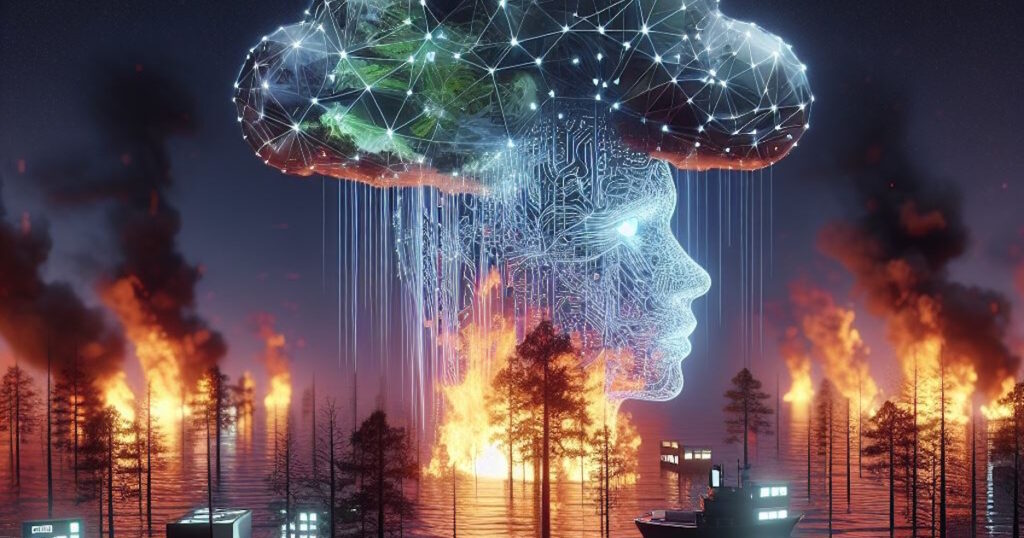
Climate change has transformed natural disasters from rare events into frequent, high impact threats. Floods, heatwaves, wildfires, cyclones, and droughts now affect economies, infrastructure, and lives at an unprecedented scale. Traditional forecasting methods, while useful, often struggle to predict these events early enough for effective prevention.
This is where Climate-AI Networks are making a critical difference.
By combining artificial intelligence, real-time data, and advanced climate models, these systems are helping governments and enterprises predict disasters before they form – enabling early action, smarter planning, and reduced damage.
What Are Climate-AI Networks?
Climate-AI Networks are intelligent systems that use AI and machine learning to analyse vast amounts of climate-related data and forecast potential risks.
They integrate data from:
· Satellite and weather stations
· Ocean and atmospheric sensors
· Historical climate records
· Geographic and environmental data
· Real-time IoT and remote sensing systems
AI models process this information continuously to identify early warning signals that humans or traditional models may miss.
The goal is not just forecasting weather – but predicting climate-driven risks with greater accuracy and lead time.
Why Traditional Forecasting Is No Longer Enough
Conventional climate models rely heavily on predefined equations and historical patterns. While effective for long-term trends, they often struggle with:
· Rapid climate variability
· Complex interactions between systems
· Localised extreme events
· Real-time decision-making needs
Climate-AI Networks overcome these limitations by learning from patterns, adapting to new data, and improving predictions over time.
How Climate-AI Networks Work
1. Continuous Data Collection
Data flows in real time from satellites, sensors, radar systems, and climate databases.
2. Pattern Recognition
AI models analyse relationships between temperature, pressure, humidity, wind, ocean currents, and land conditions.
3. Predictive Modelling
The system forecasts:
· Flood risks
· Storm intensification
· Heatwave probability
· Wildfire conditions
· Drought development
Often days or weeks earlier than traditional methods.
4. Risk Alerts & Decision Support
Governments and enterprises receive actionable insights:
· Early warnings
· Risk severity assessments
· Impact forecasts
· Recommended mitigation steps
This allows faster and more informed responses.
How Governments Use Climate-AI Networks
Governments are increasingly relying on AI-driven climate intelligence to:
· Improving disaster preparedness and evacuation planning
· Protect critical infrastructure
· Manage water resources and agriculture
· Strengthen urban resilience
· Support climate policy and long-term planning
Early predictions save lives – and significantly reduces recovery costs.
Enterprise Applications of Climate-AI
Climate risks are no longer limited to governments. Businesses across industries are adopting Climate-AI Networks to protect operations.
· Energy & Utilities
Predicting grid stress, renewable energy output, and weather-related outages.
· Insurance
More accurate risk assessment, faster claims processing, and improved pricing models.
· Agriculture
Forecasting droughts, rainfall patterns, and crop stress to optimise yields.
· Supply Chain & Logistics
Anticipating disruptions due to extreme weather and rerouting operations in advance.
· Real Estate & Infrastructure
Assessing long-term climate exposure for assets and investments.
For enterprises, Climate-AI is becoming a core risk management tool.
Benefits of Climate-AI Networks
· Earlier disaster detection
· Reduced economic and environmental damage
· Improved decision-making
· Data-driven climate resilience planning
· Lower operational and insurance risk
· Better protection of people and assets
By shifting from reaction to prediction, organisations gain valuable time to act.
Challenges and Considerations
Despite their potential, Climate-AI systems face challenges:
· Data quality and availability in certain regions
· Model transparency and explainability
· Integration with existing government systems
· Ethical use of AI in public decision-making
Addressing these challenges requires collaboration between technology providers, policymakers, and scientists.
Conclusion
Climate-AI Networks represent a powerful step forward in how the world responds to climate risk. By using AI to analyse complex climate signals, these systems enable governments and enterprises to predict disasters before they form – rather than reacting after damage is done.
Aas climate uncertainty increases, predictive intelligence will become essential for resilience, sustainability, and long-term planning.
The future of climate response is not just faster – it’s smarter, predictive, and AI-driven.