
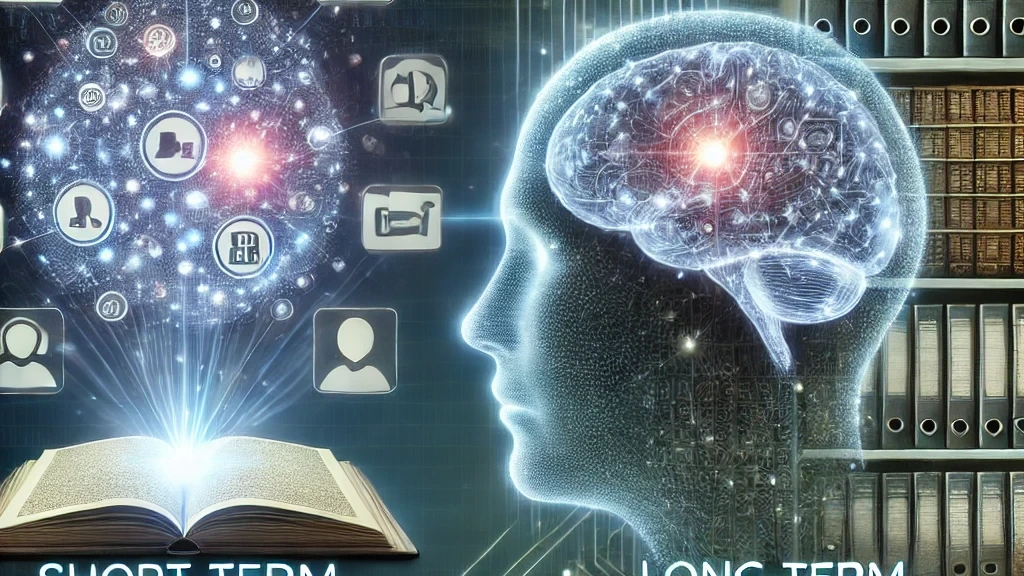
In a world overflowing with information, one challenge continues to grow: keeping track of everything we do.
Documents, messages, tasks, decisions, projects, notes, meetings – our digital lives are scattered across dozens of apps. Even the best productivity tools require us to organize, label, and search manually. But what if an AI could remember everything for you? What if it could track your work history, understand your patterns, recall past details instantly, and bring information back exactly when you need it?
Welcome to the era of AI Memory Systems – your personal “second brain.”
What Are AI Memory Systems?
AI Memory Systems are intelligent tools designed to:
· Store your entire work history
· Organise it automatically
· Understand your habits, preferences, and workflows
· Retrieve relevant information instantly
· Predict what you need before you ask
They combine:
· Long-term memory models
· Personal knowledge graphs
· Context-aware AI agents
· Semantic search
· Behavioural analysis
· Real-time indexing
The result is an AI that remembers everything you’ve ever done – and uses that memory to make work smarter, faster, and more intuitive.
Why AI Memory Is Becoming Essential?
Today’s professional handle more information than ever before:
· Thousands of emails and chats
· Countless documents and proposals
· Meeting notes and decisions
· Tasks spread across multiple tools
· Projects spanning months or years
Remembering everything is impossible. Searching for information wastes precious time. Recreating lost work costs even more.
AI Memory Systems solve these pain points by acting as your persistent cognitive partner.
How AI Memory Systems Work?
1. Continuous Capture
The AI automatically captures information as you work:
· Emails
· Chats
· Files
· Meeting summaries
· Decisions
· Code
· Tasks
No need to save or tag manually.
2. Intelligent Organization
Instead of folders, AI uses semantic relationships. It understands connections between:
· Projects
· People
· Tasks
· Topics
· Discussions
Your digital life becomes a knowledge graph, not a messy archive.
3. Instant Retrieval
Search becomes conversational:
· “Show me the proposal I edited last September.”
· “Find the discussion where we finalised pricing for the client.”
· “What were the action items from the AI team meeting last week?”
Within seconds, the exact answer surfaces.
4. Contextual Assistance
The AI knows your history – so it can help proactively:
· Reminding you of past tasks
· Suggesting relevant files
· Preparing summaries
· Auto-filling reports
· Recalling previous ideas during brainstorming
It becomes a work companion, not just a search tool.
5. Long-Term Personalization
Over time, the AI learns:
· Your writing style
· Your decision patterns
· Your workflows
· Your preferences
· Your communication tone
This transforms it into a deeply personalised intelligence system.
Real-World Uses of AI Memory Systems
1. For Business Teams
· Never lose track of project history
· Auto-generated meeting summaries and follow-ups
· Quick recall for audits, compliance, or documentation
· Quicker onboarding for new employees
2. For Creatives
· AI recalls old drafts, ideas, sketches
· Automatic inspiration retrieval
· Keeps a timeline of creative evolution
3. For Developers
· Tracks code changes, decisions, architecture notes
· Finds old solutions instantly
· Remembers bug patterns and fixes
4. For Sales & Marketing
· AI remembers every client interaction ever
· Provides personalised insights
· Recommends pitches and content based on history
5. For Leaders & Executives
· Complete memory of meetings, strategy notes, decisions
· AI- generated briefing documents
· Faster context switching
Why AI Memory Systems Feel Like a “Second Brain”
Unlike typical tools, AI memory is:
· Persistent – it never forgets
· Intelligent – it understands meaning, not just keywords
· Context-aware – it knows when and why something matters
· Predictive – it brings information before you ask
· Personalized – it grows with you, just like your actual memory
This is more than productivity. It’s cognitive augmentation.
Challenges & Ethical Considerations
While powerful, AI memory must be used responsibly:
· Privacy control is crucial
· Data permissions must be transparent
· Security must be airtight
· Bias and misuse prevention must be built in
· User control over what the AI stores and forgets is essential
The goal isn’t surveillance – it’s empowerment.
Conclusion
AI Memory Systems redefine the way we work. By offloading the burden of remembering everything, they allow humans to focus on creativity, strategy, and decision-making.
These tools don’t replace human intelligence – they enhance it. They give us back the mental bandwidth lost in searching, organising, and recalling information.
In the future, every professional will use an AI that thinks with them – one that remembers every step, every idea, every interaction. A true digital second brain.