
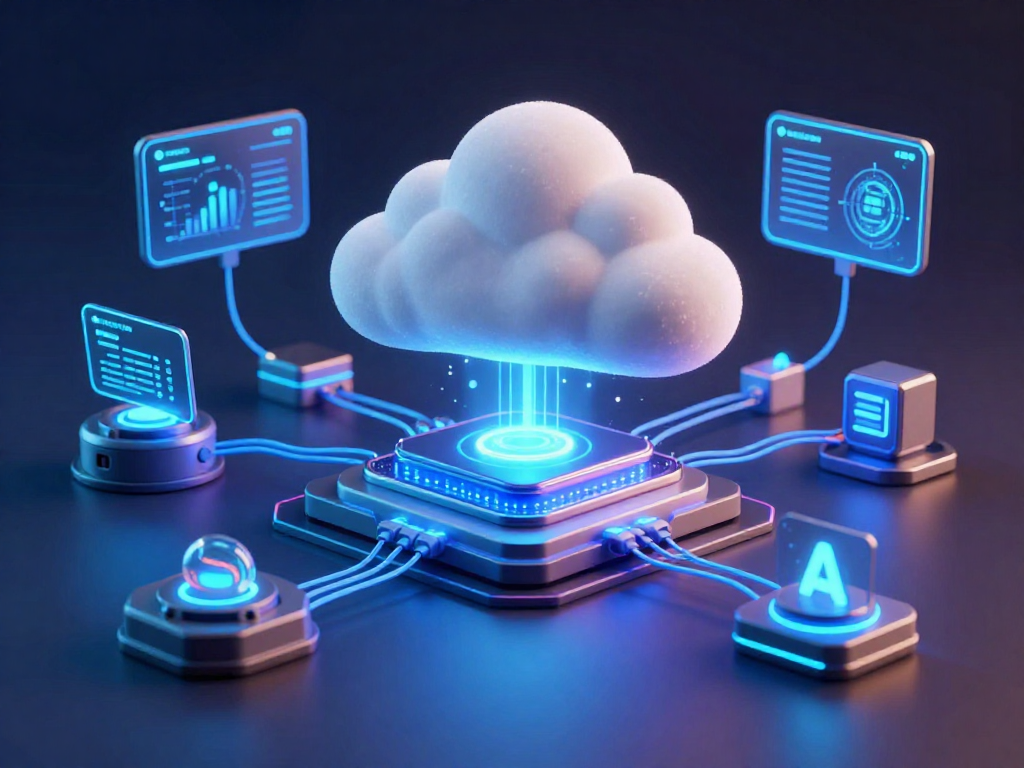
Data Gravity Shift: Why Data Is Moving Back to the Edge
For years, the cloud has been the centre of gravity for enterprise data. Applications sent information to central data centres for storage, processing, and analysis. This model worked well when data volumes were manageable and latency was not critical.
Today, the balance is changing. With the rapid growth of IoT devices, real-time applications, AI workloads, and edge computing, data is no longer flowing only toward the cloud. Instead, we are seeing a data gravity shift – where data is increasingly generated, processed, and acted upon closer to where it originates.
This shift is redefining how cloud and IoT architecture are designed.
Understanding Data Gravity
Data gravity is the idea that data attracts applications and services toward it. As data volumes grow, it becomes inefficient to constantly move that data across networks to a central location.
In the past, cloud platforms benefited from data gravity – enterprises moved applications closer to cloud data stores. Now, the opposite is happening. With billions of connected devices generating continuous streams of data, the edge itself is becoming data-heavy.
Why Data Is Moving Back to the Edge
Several factors are driving this decentralisation.
1. Explosion of IoT Devices
Sensors, cameras, vehicles, wearables, and industrial machines generate massive volumes of data every second. Sending all of this data to the cloud is expensive, slow, and often unnecessary.
Processing data locally reduces bandwidth usage and improves efficiency.
2. Latency-Sensitive Applications
Use cases like autonomous vehicles, smart factories, healthcare monitoring, and AR/VR require decisions in milliseconds. Cloud round trips introduce delays that edge processing can eliminate.
3. Cost and Bandwidth Constraints
Continuous data transfer to the cloud increases operational costs. Edge processing filters, aggregates, and analyses data before sending only what is necessary upstream.
4. Privacy and Compliance
Regulations increasingly require sensitive data to remain local. Processing data at the edge helps organisations meet privacy and data residency requirements.
5. Reliability and Resilience
Edge systems can continue operating even when connectivity to the cloud is limited or unavailable – critical for remote and mission-critical environments.
How This Shift Is Changing Cloud Architectures
The cloud is not disappearing – its role is evolving.
Modern architectures are becoming distributed and hybrid, combining central cloud intelligence with edge autonomy.
Key changes include:
· Edge-cloud collaboration instead of cloud only processing
· Distributed data pipelines where analysis happens across layers
· AI models deployed at the edge for real-time inference
· Smaller, smarter data flows moving to the cloud for aggregation and learning
Cloud platforms are now designed to support decentralised compute, orchestration, and lifecycle management across thousands of edge locations.
Impact on IoT Architectures
IoT systems are no longer built as simple “device-to-cloud” pipelines.
Instead, they follow a layered model:
· Device layer: Sensors and devices generate raw data
· Edge layer: Local processing, filtering, and AI inference
· Cloud layer: Long-term storage, analytics, training, and coordination
This architecture reduces latency, improves scalability, and enables intelligent decision-making closer to the source.
Business Benefits of the Data Gravity Shift
For enterprises, this shift delivers clear advantages:
· Faster decision-making
· Lower network and cloud costs
· Improved system reliability
· Better privacy and compliance control
· Scalable IoT deployments
· Enhanced real-time user experiences
By moving intelligence closer to data, organisations gain speed without sacrificing control
Challenges to Address
Decentralisation also introduces new complexities:
· Managing distributed systems at scale
· Securing data across edge locations
· Ensuring consistent updates and governance
· Monitoring performance outside central data centres
Successful adoption requires strong observability, automation, and security-by-design.
Conclusion
The data gravity shift marks a fundamental change in how digital systems are built. As data generation accelerates at the edge, architectures must adapt – moving from centralised cloud models to distributed, edge-aware systems.
The future is not cloud versus edge. It is cloud and edge working together, each playing to its strengths.
As decentralisation continues, organisations that embrace this shift will be better positioned to build faster, smarter, and more resilient digital platforms.
At TeMetaTech, we see the data gravity shift as a key driver of next-generation cloud and IoT architecture – shaping how intelligent systems will operate in the years ahead.