
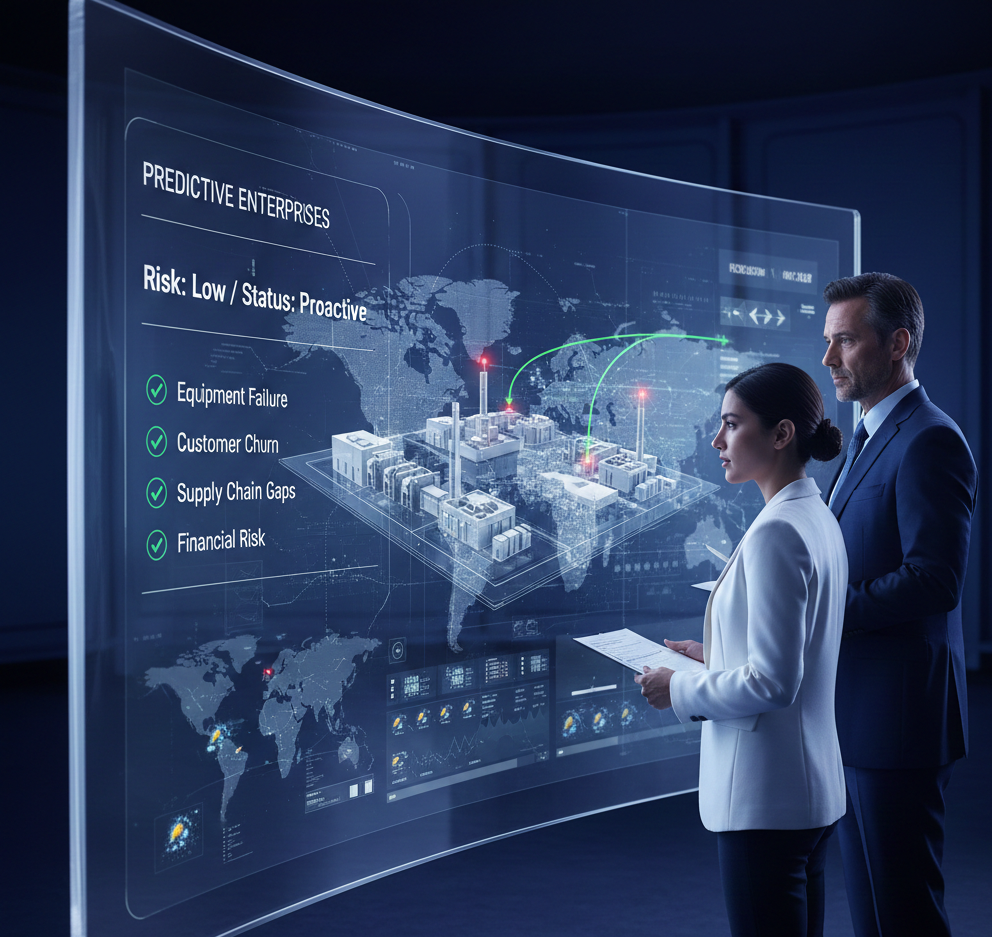
Modern businesses operate in an environment where even small delays or unexpected failures can create major disruptions. Traditionally, companies have responded to problems after they occur – fixing breakdowns, addressing customer complaints, or managing supply chain delays once the impact was already felt.
Today, predictive AI is changing that model completely. A new category of organisations, called predictive enterprises, are using data and intelligence to identify risks early and take action before issues ever appear.
This shift from reactive to proactive operations is becoming one of the strongest competitive advantages in the digital world.
What Is a Predictive Enterprise?
A Predictive Enterprises uses AI and analytics to:
· Detect early warning signs
· Forecast future problems
· Recommend preventive actions
· Automate responses
· Reduce or eliminate downtime
Instead of waiting for something to go wrong, these systems analyse patterns in real time and highlight what may happen next.
This allows companies to respond early, minimize risk, and keep operations running smoothly.
How Predictive AI Works in a Business
Predictive systems follow a simple but powerful cycle:
1. Collect Data
Operational data, customer activity, machine performance, supply chain updates – everything is captured continuously.
2. Analyse & Identify Patterns
AI models detect trends, anomalies, and behaviour that humans might miss.
3. Predict Outcomes
The system forecasts events such as:
· Equipment failures
· Customer churn
Delivery delays
· Fraud attempts
· Traffic spikes
4. Recommend or Automate Actions
The system either alerts teams or automatically takes steps to prevent issues. This creates a business environment where decisions are guided by insights, not guesswork.
Where Predictive Enterprises Deliver Value
· Manufacturing
Predictive maintenance prevents equipment breakdowns, reducing downtime and repair costs.
· Retail & E-commerce
AI predicts customer demand, stock shortages, and churn, helping companies stay prepared.
· Finance
Forecasting models detect fraud patterns and irregular transactions early.
· Healthcare
Patient data is analysed to identify early signs of illness or complications.
· IT & Cloud Operations
AI predicts outages, performance drops, and capacity issues before they affect users.
Across industries, the impact is the same: fewer surprises, smoother operations, and better outcomes.
Benefits of Becoming a Predictive Enterprises
· Proactive risk management
· Reduced downtime and operational disruptions
· Lower maintenance and support costs
· More accurate decision-making
· Stronger customer satisfaction
· Better resource planning
Predictive enterprises operate with more confidence because they can see what’s coming.
Challenges to Consider
While highly beneficial, predictive operations require:
· Clean, reliable data
· Integration across systems
· Proper governance and security
· Skilled teams to manage models and insights
However, with modern cloud platforms and ready-to-use AI tools, these challenges are becoming easier for businesses of all sizes to manage.
Conclusion
Predictive Enterprises represent a major step forward in how companies operate. By forecasting problems early and acting before disruptions occur, businesses become more resilient, efficient, and customer focused.
Predictive AI helps organisations stay ahead of risks instead of reacting to them – transforming day-to-day operations into a smoother, smarter, and more controlled experience.
In a competitive world, the ability to anticipate is becoming just as important as the ability to react. With predictive intelligence, businesses can move confidently into a future where fewer problems appear – because they’ve already been prevented.